
Comporta is not sold by the square metre. It never was.
In 1955, the Espírito Santo family bought Herdade da Comporta from British-owned Atlantic Company: 12,500 hectares of rice paddies, pine forest and dunes, an hour from Lisbon. Nationalised after the April 1974 revolution and returned to the family between 1989 and 1991, the estate lived for decades as a discreet retreat — the kind of place where those who could have everything chose to walk barefoot, eat grilled fish with sand between their toes and, above all, not be seen. Nobody wanted to be noticed. The sophistication was, and still is, in the simplicity.

2014: the collapse that changed the estate's destiny
When the Espírito Santo Group collapsed in 2014, many assumed the spell would break. The opposite happened. In 2019, part of the tourism assets — roughly 1,376 hectares out of the 12,500 total — were sold to a consortium formed by Vanguard Properties, owned by Frenchman Claude Berda, and Amorim Luxury, owned by Paula Amorim, for €157.5 million. The two companies later parted ways: Amorim kept the Pego beach restaurant in Carvalhal and around 100 hectares of the forest belt; Vanguard consolidated the largest real estate portfolio. Today the territory has multiple players — Vanguard, Amorim, Six Senses/Pinheirinho and others — and the market has opened, definitively, to international capital.
The recurring logic: experience first, property second
What followed confirms a logic I have observed for four decades: the projects that appreciate the most deliver experience first — the beach, the table, the club, the lifestyle — and only then the property. The restaurant before the house. The beach club before the development. The lifestyle before the deed.
Whoever buys in Comporta today is not buying a property. They are buying belonging to something that already exists. Which is why price per square metre stops being the central variable: what is being transacted is access, rhythm, and the promise that tomorrow's neighbours will be the same kind of person who chooses to walk barefoot.
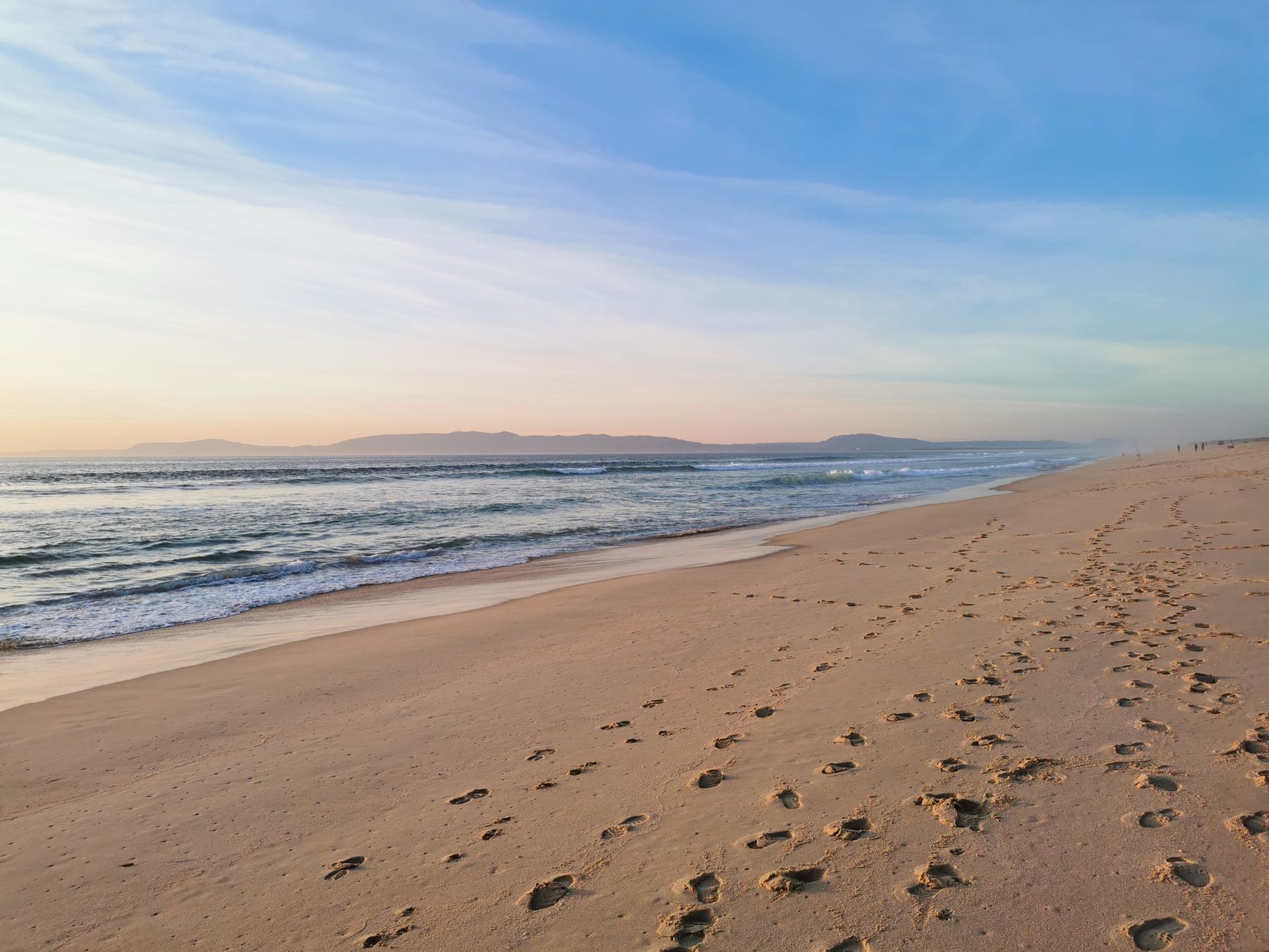
1985, Iporanga: I learned early that the property is consequence of the territory
I recognise this movement because I lived it before. In 1985 I started working in Iporanga, in Guarujá, Brazil — a place where the Atlantic Forest, the sea and privacy were worth more than any architectural finish. The houses were consequence of the territory, never the reverse. Buying in Iporanga was, above all, choosing whom to share a beach with, and how much silence one was willing to protect.
Forty years later, in Portugal, I ask my clients the same question I always have: what exists around this property that time will make more valuable? In Comporta, the answer starts with something that cannot be built: silence, bare feet, and the pleasure of not needing to prove anything to anyone.
What this means for anyone looking at Comporta in 2026
Three practical observations for international investors considering Comporta today:
- Real, not manufactured, scarcity. Most of the Herdade remains protected (Sado Estuary Nature Reserve, Natura 2000 network). New developments are rare, licensed with tight quotas and subject to environmental criteria. This supports values in the medium-to-long term — but also stretches timelines and reduces liquidity.
- Off-market is the norm. The best opportunities in Comporta rarely appear on portals. Private houses, gated-community sub-plots, early-phase units in hotel-condominium schemes: almost everything moves through trusted networks.
- Tourism yield exists but depends on the AL licence. Serious short-term rental operations project gross yields of 4–6% per year — but this is subject to the Local Accommodation licence, operator quality and positioning (high prices, selective occupancy).
We do not publish a Comporta catalogue. Real opportunities move in private conversations, with mutual selection between seller and buyer. If you want to understand the market before signing anything, begin with a conversation — no catalogue, no ready-made proposals.
Frequently asked questions about buying in Comporta
How much does a house cost in Comporta in 2026?
Prices per m² range from €3,000 to €10,000, depending on the sub-market (Carvalhal, Muda, Pego, Melides) and condition — traditional restoration vs. new signature-architecture builds. Turnkey houses in gated communities with a beach club typically start above €2 million.
Is Comporta still 'off-market' in 2026?
Yes, for the segment above €1.5M. There are properties listed publicly, but the most interesting transactions (estates, family homes, plan-phase sub-plots) still take place within a closed network, often without ever touching portals.
Is Comporta worth it for short-term rental?
Only if: (1) the property holds an active AL licence or has clear eligibility; (2) a senior management operator is involved; (3) the horizon is 7+ years. Comporta is not a flip market — it is a hold-and-use market.
Is it true that Amorim bought everything?
No. In 2019, Amorim Luxury and Vanguard Properties formed a consortium that bought part of the tourism assets (around 1,376 hectares out of 12,500 total). They later parted ways: Amorim kept the Pego restaurant and around 100 hectares; Vanguard now holds the largest real estate portfolio. Other important operators exist (Six Senses/Pinheirinho, among others).
What is the difference between Comporta and Melides?
Comporta is the historic core, with the anchor projects and international recognition. Melides — 20 minutes to the south — gained visibility from 2021 when Christian Louboutin opened his Vermelho hotel there. For many international buyers, Melides today represents 'the new Comporta' — more rustic, with less turnkey supply, and price-per-m² still below central Comporta.